


Sous Vide Chicken Breast is an easy way to cook juicy, tender chicken with consistent results. The chicken cooks in a temperature-controlled water bath, helping it stay moist and flavorful without drying out.
I love how tender chicken breast turns out using this method. It’s a great way to prepare chicken ahead of time for salads, sandwiches, or quick meals throughout the week.

How to Make Sous Vide Chicken Breast
Prepare the Water Bath: Set your sous vide cooker to 151°F and allow the water to reach temperature.
Season the Chicken: Season the chicken breasts as desired and place them in a food-safe sous vide bag. Seal the bag.

Cook the Chicken: Submerge the sealed bag in the water bath and cook for 90 minutes.

Pat Dry: Remove the chicken from the bag and pat dry with paper towels.
Sear the Chicken: Heat a cast iron skillet over high heat and add a little olive oil. Sear the chicken for 1–2 minutes per side until golden brown.

Questions Readers Ask Most
Can you cook frozen chicken breast sous vide?
Yes, you can cook chicken breast from frozen. It will need additional cooking time to heat through and reach a safe pasteurization time.
What temperature should I sous vide chicken breast?
This recipe uses 151°F for tender, juicy chicken. Cooking time depends on the thickness of the chicken, so use a reliable sous vide pasteurization chart to determine the safe cooking time.
How do I store leftover sous vide chicken?
Store cooked chicken in an airtight container in the refrigerator for up to 3–4 days. You can also freeze it for up to 3 months.
More Sous Vide Recipes
How to make the BEST Chicken Breast Sous Vide
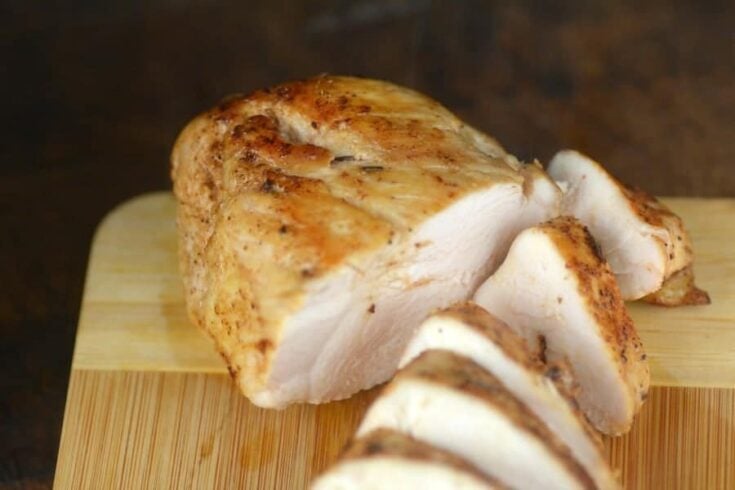
Sous Vide Chicken Breast is tender, juicy chicken finished with a quick sear in a hot cast iron skillet.
Ingredients
- Boneless, skinless chicken breasts
- Salt and pepper, or your favorite seasonings
- Olive oil, for searing
Instructions
Preheat the sous vide water bath to 151°F.
Season the chicken breasts and place them in a food-safe sous vide bag. Seal the bag.
Submerge the bag in the water bath and cook until the chicken has reached a safe pasteurization time based on its thickness.
Remove the chicken from the bag and pat dry with paper towels.
Heat a cast iron skillet over high heat and add a little olive oil.
Sear the chicken for 1–2 minutes per side, until golden brown.
Notes
The original recipe used 151°F for 90 minutes. However, safe sous vide cooking times depend on the thickness of the chicken. Check a reliable thickness-based poultry pasteurization chart before cooking.
Pat the chicken dry before searing to help create a golden crust.
Recommended Products
As an Amazon Associate and member of other affiliate programs, I earn from qualifying purchases.

Nutrition Information:
Yield:
4Serving Size:
1Amount Per Serving: Calories: 67Total Fat: 3gSaturated Fat: 1gTrans Fat: 0gUnsaturated Fat: 2gCholesterol: 31mgSodium: 125mgCarbohydrates: 0gFiber: 0gSugar: 0gProtein: 10g

I’m so glad the temperature worked well for you! Sous vide chicken, in my opinion, is one of the great ways to eat a high protein, low carb diet and not gag as you choke down the food. 🙂 Lots of love to you!
This looks like perfection. I can taste it thru the photo lol… Send me a piece
Thanks for sharing awesome chicken breast recipe cook with sous vide. Its way healthy and look delicious! Very thorough cooking step . Thanks again
This has inspired me to buy a sous vide! Do you bring the water temperature up to 151 before placing the sealed chicken bag inside? Or do you place the sealed chicken in cold water and let the temperature rise to 151?
Either is okay providing the temp can reach target quickly if placing the chicken in cold water. Best is to bring to target temp first.
151 is way too high. You’ll have a strange stringy texture. Cook your chicken between 140-145 and you’ll have a silky smooth, soft chicken.
I just made this for my family-first sous vide trial and at 151 F the chicken was moist and not at all stringy. We all loved it and I wish I made enough for leftovers! Next time…
Hi, I am new to sous vide. Can you leave the chicken in the bag after cooking until ready to sear or is it best to sear & repackage after it cools? Thank you!
Everywhere I read chicken should be cooked to an internal temperature of 165F, is 151F high enough?
@Kevin, Salmonella and some other pathogens are killed almost instantly at 165F. Sous vide takes longer to kill them while using lower temperatures.
@Kevin, pasteurization is a function of both time and temperature. The internal temp of 165 that the FDA recommends is a good rule of thumb and should be abided by for most cooking methods. However, since you will be cooking the chicken in the water bath for an hour or two (depending on thickness) you can achieve the same safe level of pasteurization at a lower temperature.
@Kevin, the process of killing off harmful microbes is called pasteurization. It is actually a combination of time and temperature. The 165 degree F temp that you mention is the temperature at which microbes are killed off pretty much instantaneously. You can do this at much lower temperatures if you can hold the temperature for the right amount of time. That is where sous vide excels. It allows you to prepare foods safely at lower temps, keeping the moist and with a different texture than you would get by cooking to the higher temp required by other forms of cooking. Pasteurization tables are easy to find and use. Sous vide is amazing!
Looks great! Do you have any go to seasoning recommendations?
151F is the perfect temp.
The only thing I’d suggest changing is that you want to use safflower oil for the searing and not olive oil.
Have you frozen the chicken after cooking in the vacuum sealed bag after it has cooled?
Great tips! Sous vide chicken breast is always so juicy and tender. I love how easy it is to get perfect results every time with this method.